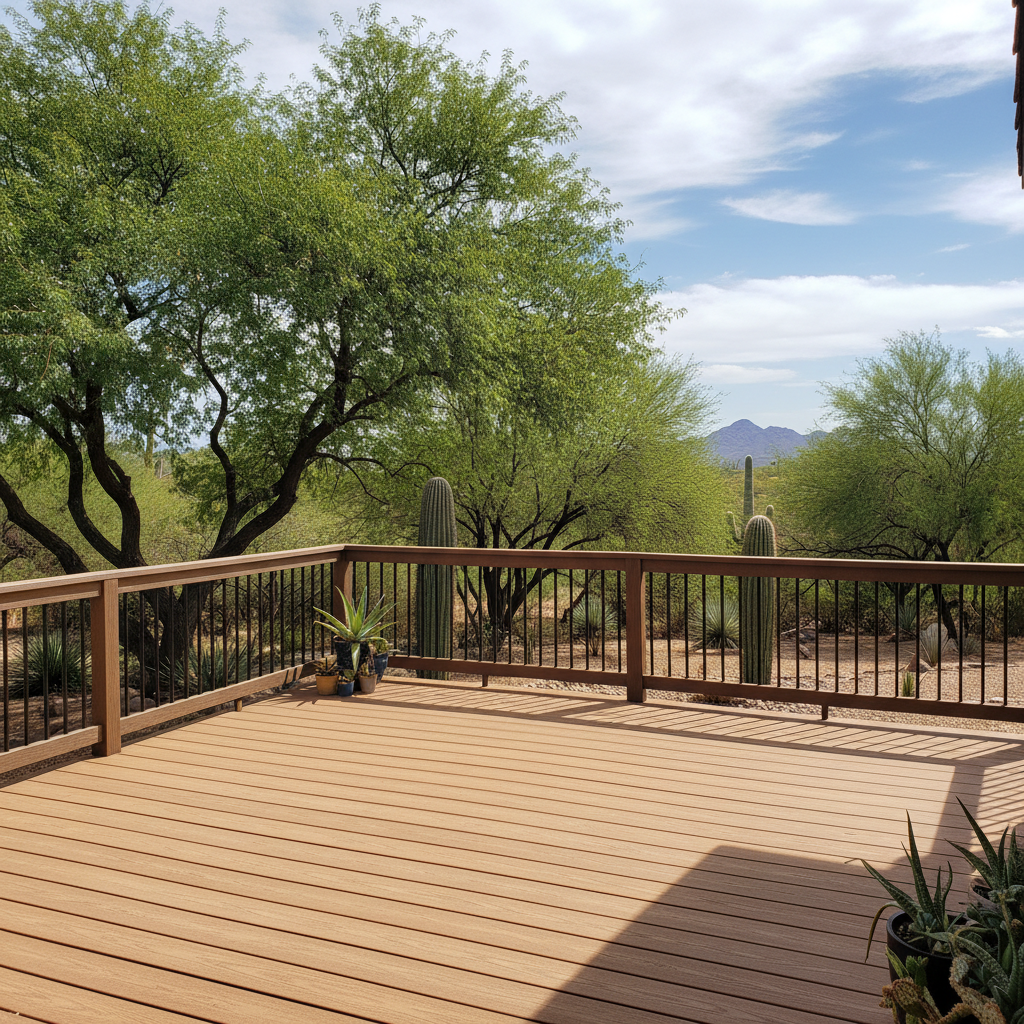
Alright, let's talk composite decks here in Apache Junction. I hear it all the time: "Composite means no maintenance, right?" Well, not exactly. While they're definitely easier than wood, our Arizona climate throws some serious challenges at anything outdoors. The intense sun, the dust, those sudden monsoon downpours – they all take a toll. You've put good money into that deck, so you want it to last, naturally. Here's my straight talk on keeping your composite deck in top shape.
Extend Your Deck's Lifespan in the Desert Heat
The biggest enemy of anything outdoors in Apache Junction is the sun. That relentless UV exposure can fade colors and, over time, actually degrade materials. So, what can you do?
- Shade is Your Friend: This is huge. Adding a pergola, a shade sail, or even strategically planting some shade trees can make a massive difference. Not only does it protect your deck, but it makes your outdoor space way more comfortable to use when it's 110 degrees out. Lighter-colored composite boards also reflect more sunlight and stay cooler underfoot, which is definitely something to think about if you're building new or replacing.
- Keep it Clean: Sounds simple, right? But dust and debris don't just look bad; they can trap moisture and even encourage mildew growth, especially in shaded areas or after a monsoon. Regular cleaning stops this buildup from becoming a bigger problem.
- Mind the Weight: Composite can scratch easier than you might think. When you're moving patio furniture or that heavy BBQ grill, lift it, don't drag it. Those scratches can be tough to get out and can compromise the surface over time.
What Regular Maintenance Looks Like
You don't need to baby a composite deck, but a little routine care goes a long way. Think of it like changing the oil in your truck – a small effort now saves big headaches later.
- Sweep it Off: Weekly, or at least every couple of weeks, give your deck a good sweep. Get rid of leaves, dirt, and that fine desert dust that blows in from the Superstition Mountains.
- Wash it Down: A good wash a few times a year is essential. You can use a garden hose and a soft-bristle brush with warm, soapy water (a mild dish soap works great). For tougher grime, look for cleaners specifically made for composite decking. Avoid harsh chemicals or abrasive scrubbers, though, as they can damage the surface.
- Pressure Washing? Be Careful: You can pressure wash composite, but you really need to know what you're doing. Use a low-pressure setting (around 1500 PSI or less) and a fan tip, keeping the nozzle moving and a safe distance from the deck. Too much pressure can damage the boards and even void your warranty. If you're not confident, call a pro.
- Clear the Gaps: Make sure the gaps between your deck boards stay clear. This helps with proper drainage after rain and allows for air circulation, which is important for cooling.
Warning Signs of Problems
Your deck will usually tell you when something's not right. You just need to know how to listen.
- Fading or Discoloration: While composite is designed to resist fading, our sun is a beast. If you notice significant, uneven fading, especially in high-traffic or unshaded areas, it could be a sign the UV inhibitors are breaking down.
- Warping or Cupping: Composite is pretty stable, but extreme temperature changes can sometimes cause boards to warp or cup. This often points to underlying issues, like improper installation or poor ventilation underneath.
- Cracks or Splitting: You shouldn't see cracks or splits in composite. If you do, it indicates a defect in the material or severe stress.
- Loose or Wobbly Railings: This is a big safety concern. If your railings feel shaky when you lean on them, don't ignore it. It could mean rusted hardware, loose fasteners, or even structural issues with the posts.
- Soft Spots: If any part of your deck feels soft or spongy when you walk on it, that's a serious red flag. While less common with composite than wood, it can indicate structural damage or water intrusion.
- Mold or Mildew: Even composite can get mold and mildew, especially in damp, shaded areas or if it's not cleaned regularly. It's usually just a surface issue, but if it's persistent, it means you've got a moisture problem somewhere.
When to Call a Professional
Look, I'm all for homeowners tackling what they can, but some things are best left to the pros. Your deck is a structural part of your home's outdoor living space, and safety is a big deal.
- Structural Concerns: If you see any signs of warping, significant sagging, or loose railings, get a professional inspection. These aren't just cosmetic issues; they can be serious safety hazards.
- Persistent Stains or Mold: If you've tried cleaning and can't get rid of stubborn stains or recurring mold, we've got specialized tools and cleaners that can often fix it without damaging your deck.
- Damaged Boards: A single cracked or severely scratched board might be replaceable. But if you have multiple damaged boards, or if the damage seems to be spreading, it's time for an expert opinion.
- Post-Monsoon Inspection: After a particularly rough monsoon season with heavy winds and rain, it's a good idea to have someone check for loose fasteners or any hidden damage. The wind can really work on connections over time.
- You're Unsure: Honestly, if you're ever questioning the integrity of your deck or feel overwhelmed by a problem, just call us. It's always better to catch issues early. We'd rather give you peace of mind with a quick check than have you deal with a major repair later. At Apache Junction Deck Builders, we're happy to come take a look and give you an honest assessment.
Taking care of your composite deck isn't rocket science, but it does require a little attention, especially with the unique challenges of living out here. A well-maintained deck isn't just safer; it looks better and adds value to your home for years to come.