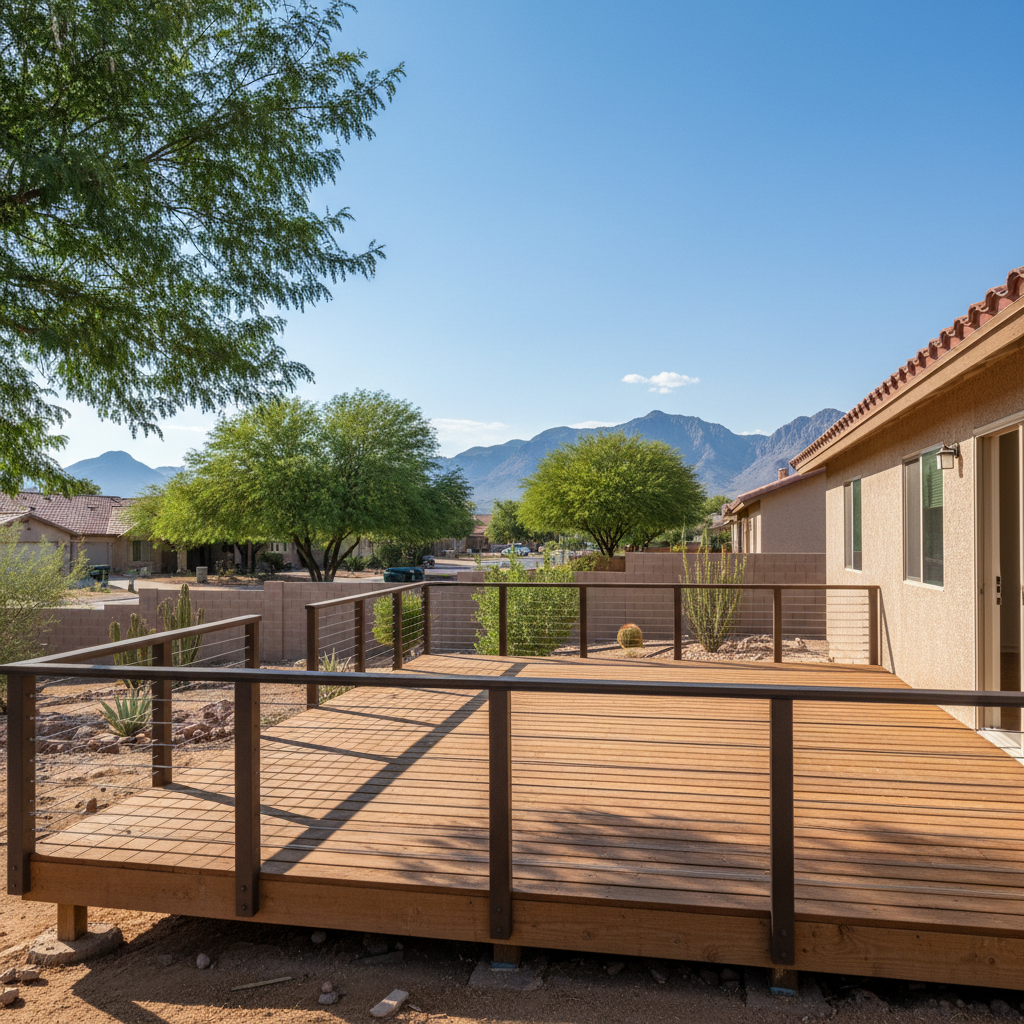
Ever stood on a deck and felt that railing wobble a bit? Or maybe you've got an older place in Apache Junction, one of those homes out near Gold Canyon or Superstition Mountain, and the original wood railings are looking a little rough. Well, let me tell you, deck railings aren't just about making your deck look good; they're a big deal for safety. And they've absolutely got to stand up to our desert conditions.
Why Your Deck Railing Matters (It's More Than Just Looks)
Most folks think about the deck boards first, right? That's the surface you walk on. But the railing? That's what keeps your kids, your pets, and even your tipsy uncle from taking an unexpected tumble. Here in Arizona, where we often build elevated decks to capture those mountain views or just to deal with uneven desert terrain, a solid railing isn't just a building code requirement; it's what lets you relax.
I've seen it all, from railings barely hanging on to brand new ones installed incorrectly. The thing is, a railing has to withstand a surprising amount of force. Imagine someone leaning against it, or a couple of kids playing around. It needs to be sturdy. We're talking about specific height requirements, spacing between balusters, and how it anchors to the deck structure itself. These aren't just suggestions; they're rules, put in place to keep people safe.
Common Railing Materials We Use Around Here
You've got options, and each one has its pros and cons, especially when you consider our intense Apache Junction sun and those monsoon storms.
- Wood: Still a classic, and it can look fantastic. Pressure-treated pine, cedar, redwood – they all have their place. The catch? Our dry climate and UV rays can really beat up wood if you don't maintain it. You'll need to stain or seal it regularly to prevent cracking, splintering, and fading. It's a commitment, but a beautiful one if you're up for it.
- Composite: This is a popular choice for a good reason. It's low maintenance, doesn't splinter, and comes in a ton of colors and styles. It holds up great against the sun, and you don't have to worry about termites, which are definitely a thing around here. It usually costs a bit more upfront than wood, but you save on maintenance down the line.
- Vinyl/PVC: Another low-maintenance option that won't rot, rust, or need painting. It's durable and easy to clean. Some folks don't love the look as much as wood or composite, but for sheer practicality, it's tough to beat.
- Aluminum or Steel: These are incredibly strong and offer a sleek, modern look. They're great for visibility, especially if you've got a killer view of the Superstitions. Powder-coated finishes mean they resist our sun well and won't rust easily. We often combine them with other materials, like composite top rails, for a custom look.
- Cable Railing: This is a favorite for folks who want an unobstructed view. Thin stainless steel cables run horizontally, giving a very contemporary feel. It's strong and durable, but installation needs to be precise to meet code requirements for tension and spacing.
Local Conditions and Your Railing
Here in Apache Junction, we're not dealing with snow loads, but we've got our own challenges. That intense summer sun? It'll fade and dry out wood faster than you can say 'Saguaros.' The dust and dirt from our desert winds can also settle on railings, making maintenance a factor. And don't forget those torrential monsoon downpours; they can really test the integrity of any outdoor structure. We also have to consider how materials expand and contract with our extreme temperature swings.
I've worked on homes all over, from those older mobile home parks that have added decks to the custom builds in places like Entrada Del Oro. Each one has its own quirks, its own soil conditions, its own sun exposure. That's why you can't just slap up any old railing and call it a day. It needs to be designed and installed with our specific environment in mind. Believe me, it makes a difference.
Why Local Expertise Isn't Just a Buzzword
Look, anyone can read a building code book. But knowing how those codes apply to a deck that's baking in 115-degree heat, or how to properly anchor a post into the rocky soil we often find here? That comes from experience. I've seen what works and what doesn't in Apache Junction. We understand the local permitting process, the specific wind load requirements for our area, and the best ways to protect your investment from the elements.
When you're looking at a new railing, or upgrading an old one, you want someone who's not just going to install it, but install it right the first time. Someone who knows that a railing isn't just a barrier, but an integral part of your deck's structure and safety. If you're thinking about your deck railings, give us a call at Apache Junction Deck Builders. We'd be happy to come out, take a look, and talk through the best options for your home and our unique desert environment.